
Brightview Psychiatry Solutions
Nexus letters that connect sleep apnea to your service.
Evidence-based nexus letters linking obstructive sleep apnea to PTSD, sinusitis, rhinitis, obesity and COPD — written to the standard VA adjudicators weigh.
- Psychiatry
- Sleep, PTSD and TBI pathways
- VA-fluent
- Built for adjudicator standards
- Cited
- Backed by medical literature
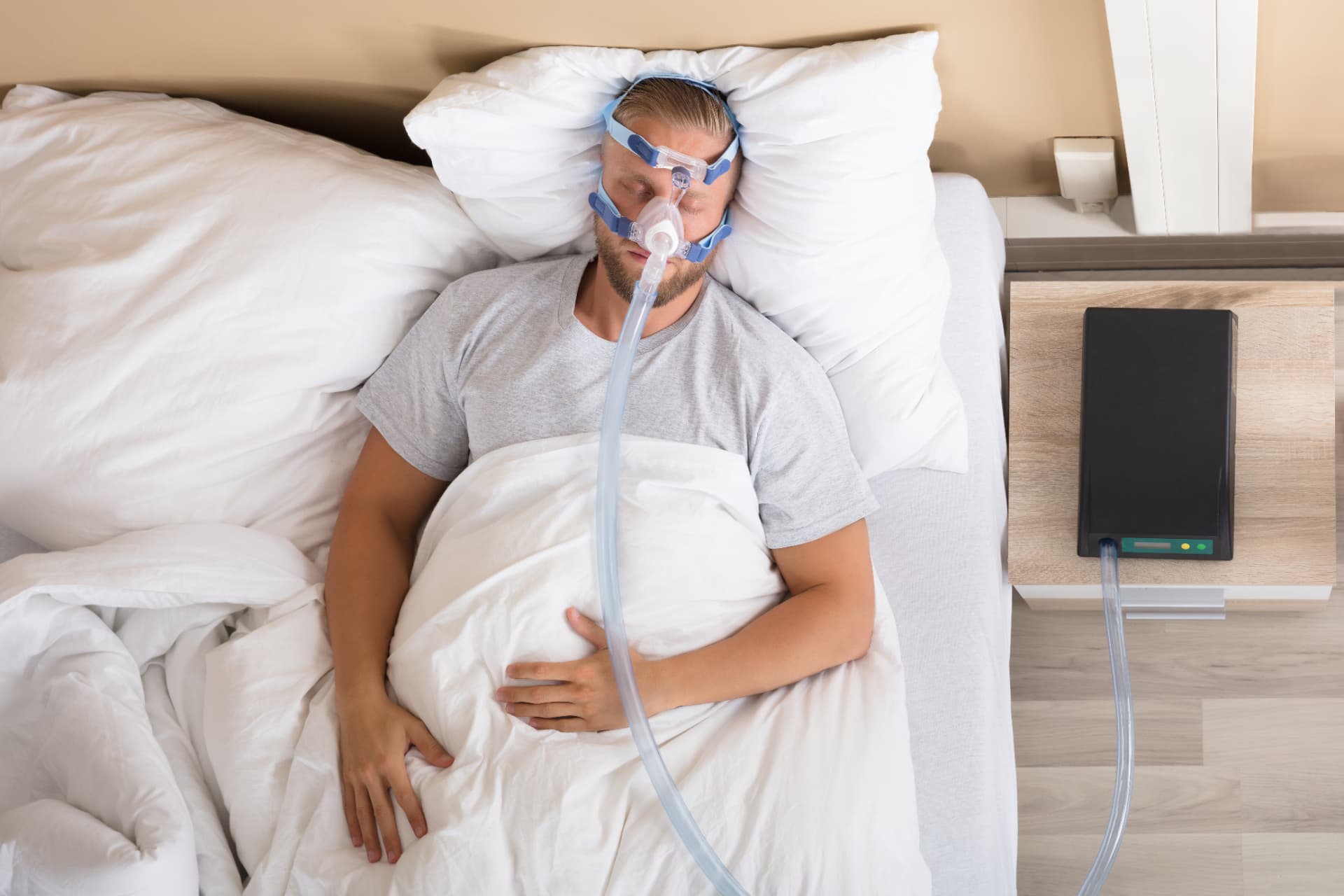
How to get sleep apnea service connected
Five steps, from diagnosis to a filed claim.
- 01
Confirm a medical diagnosis
The VA requires a formal sleep apnea diagnosis, typically confirmed by a sleep study. A nexus letter cannot be written before a diagnosis is established.
- 02
Free phone consultation
We discuss the conditions you're seeking service connection for, weigh the strengths and weaknesses of your claim, and identify other conditions worth filing.
- 03
Records review
Upload your DD 214, C-File, VA and private records, rating decisions, imaging, buddy letters and personal statements through a HIPAA-compliant client portal.
- 04
Drafting your letter
Dr. Allen drafts your letter with precise medicolegal language and citations to the medical literature supporting every assertion. DBQs completed on request.
- 05
Receive and file
Your letter states your sleep apnea is "at least as likely as not" related to service, ready for you, your VSO or your accredited representative to file.
How the VA rates sleep apnea (38 CFR § 4.97, DC 6847)
Sleep apnea is rated under diagnostic code 6847. Most veterans prescribed a CPAP machine fall in the 50% band.
| Rating | Criteria |
|---|---|
| 0% | Asymptomatic but with documented sleep disorder breathing. |
| 30% | Persistent day-time hypersomnolence. |
| 50% | Requires use of a breathing assistance device such as a CPAP machine. |
| 100% | Chronic respiratory failure with carbon dioxide retention, cor pulmonale, or requires tracheostomy. |
Ratings are assigned by the VA based on your documented symptoms and treatment. A nexus letter addresses service connection, not the percentage you receive.
Secondary connections we write
Each letter is built around the specific medical pathway between your service-connected condition and obstructive sleep apnea.
Sleep Apnea Secondary to PTSD
Sleep fragmentation, hyperarousal and REM disruption tie PTSD directly to obstructive sleep apnea severity.
Learn more →Sleep Apnea Secondary to Sinusitis
Chronic sinus inflammation narrows the upper airway and worsens nightly obstruction and oxygen desaturation.
Learn more →Sleep Apnea Secondary to Rhinitis
Persistent nasal congestion forces mouth breathing, a well-documented aggravator of OSA.
Learn more →Sleep Apnea Secondary to Obesity
Service-connected conditions and their medications frequently drive the weight gain behind OSA.
Learn more →Sleep Apnea Secondary to COPD
Overlap syndrome compounds nocturnal hypoxemia and strengthens a secondary service-connection argument.
Learn more →From the blog
Plain-language guidance on VA sleep apnea claims and the evidence behind them.

STOP-BANG Questionnaire: Free Sleep Apnea Screening for Veterans
Take the validated 8-question STOP-BANG screener, get your risk score instantly, and download a physician-ready report you can bring to your doctor or VA clinic.

Nexus Letters: Sleep Apnea, Alcohol Use, and VA Disability Claims
Yes, alcohol use can be relevant in a VA sleep apnea claim, but the issue has to be handled carefully.
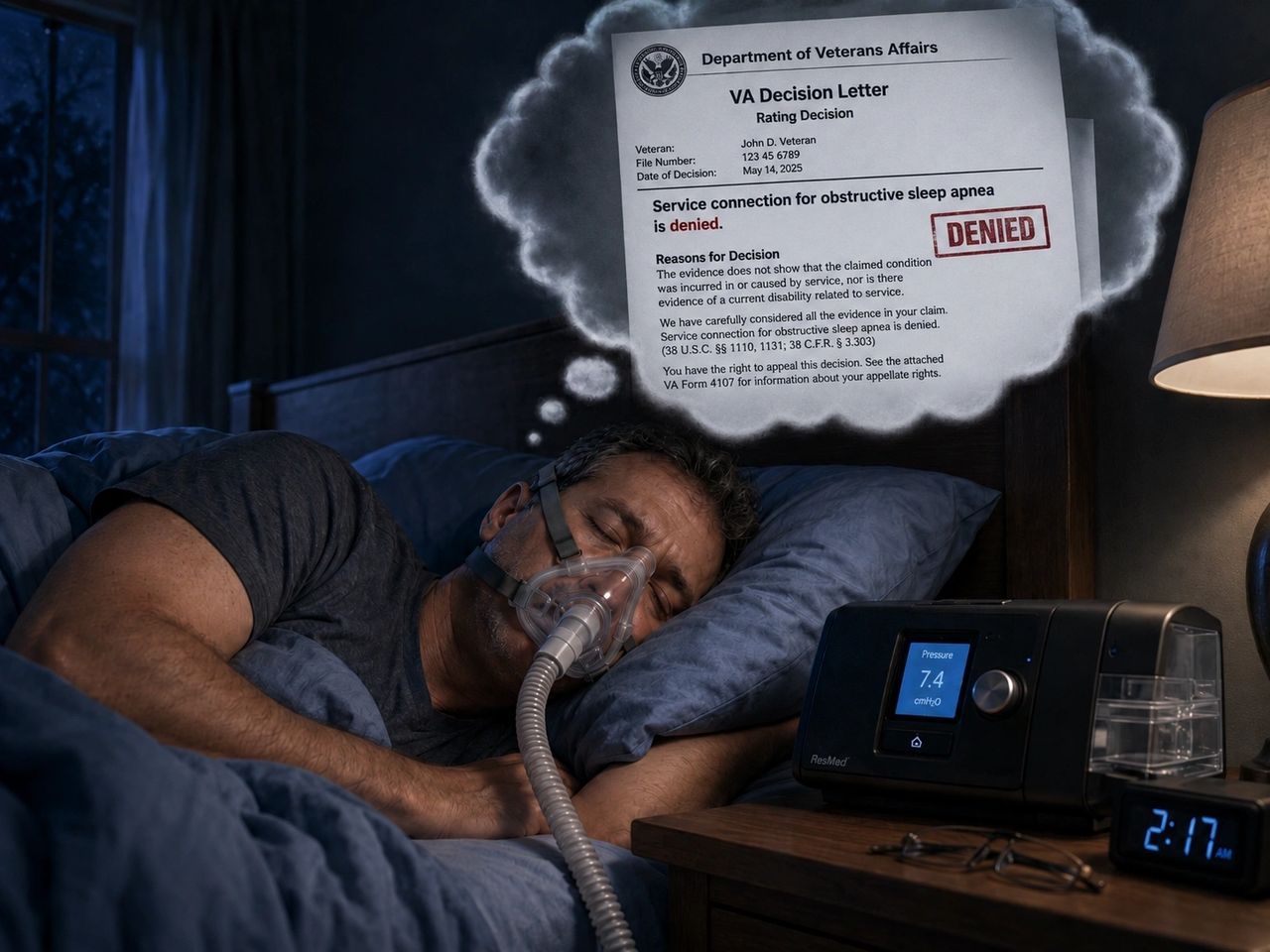
Sleep Apnea Claim Denied? Here's What to Do Next
A denial is not the end of your claim. In most cases, a denied sleep apnea claim means one thing was missing — clear medical evidence linking your obstructive sleep apnea (OSA) to your…
Written by a psychiatrist who knows the VA system
Dr. Jessica Allen combines years of clinical psychiatry with in-depth VA disability consulting experience. That pairing matters: a nexus letter has to be clinically defensible and written in the language adjudicators are trained to weigh.
Every opinion is grounded in your actual records and supported with citations to the medical literature — no templates, no boilerplate rationale.
Nexus letters are independent medical opinions. No outcome with the VA can be guaranteed.
Frequently asked questions
Common questions from veterans about sleep apnea nexus letters and VA claims.
What is a nexus letter for sleep apnea?
A nexus letter is an independent medical opinion from a physician stating whether your obstructive sleep apnea is at least as likely as not caused or aggravated by your military service or by an already service-connected condition. It explains the medical reasoning and cites the literature that supports that conclusion.
Do I need a sleep study before ordering a nexus letter?
Yes. The VA requires a formal diagnosis of sleep apnea, normally confirmed by an in-lab or home sleep study. Without a documented diagnosis there is no current disability to connect, and a nexus letter cannot be written.
How is sleep apnea rated by the VA?
Sleep apnea is rated under 38 CFR 4.97, diagnostic code 6847: 0% for asymptomatic documented sleep disordered breathing, 30% for persistent daytime hypersomnolence, 50% when a breathing assistance device such as CPAP is required, and 100% for chronic respiratory failure with carbon dioxide retention, cor pulmonale, or a tracheostomy requirement.
Can sleep apnea be service connected years after discharge?
Yes. There is no time limit on filing. Many veterans are diagnosed long after separation and still win service connection by showing in-service symptoms, continuity of symptoms, or a secondary link to a condition that is already service connected.
How much does a nexus letter cost and how long does it take?
Pricing and turnaround depend on the complexity of your records and the number of conditions involved. Both are discussed openly during the free phone consultation before any commitment is made.
Does a nexus letter guarantee my claim will be granted?
No. A nexus letter is an independent medical opinion, not a decision. It provides the medical evidence the VA weighs, but no provider can guarantee the outcome of a VA claim.
Start with a free phone consultation
Talk through your diagnosis, your service history and whether a nexus letter is the right next step for your claim.
Schedule your consultationLast reviewed: by Jessica R. Allen, M.D. Reviewed against current VA rating criteria. The VA's proposed respiratory rating changes have not been finalized, so the criteria in 38 CFR § 4.97 remain in force.
Free download
Sleep Apnea DBQ (Disability Benefits Questionnaire)
The VA sleep apnea DBQ is the form your treating provider completes to document your diagnosis, sleep study results, CPAP prescription, and daytime symptoms. Print it, bring it to your appointment, and submit the completed form with your claim.