
← Blog

How Your Spouse Might Help You Win Your VA Sleep Apnea Claim

By Dr. Jessica R. Allen, M.D., psychiatristMedically reviewed August 2026

Veteran and spouse sitting together at home, reflecting a spouse buddy letter supporting a VA sleep apnea claim.

Author: Jessica R. Allen, M.D. | Physician and Former C&P Examiner

Updated and Reviewed: July 1, 2026

Want help connecting the evidence? Book a free consultation or call (919) 849-8617

Quick answer: A spouse buddy letter is a written, firsthand statement from your husband or wife describing the sleep apnea symptoms they witnessed — loud snoring, choking, gasping, or pauses in breathing — especially during your time in service. Because obstructive sleep apnea (OSA) often goes undiagnosed for years, a spouse who shared a bed with you on active duty may be your single best witness for proving your symptoms began in service. Paired with a formal diagnosis and a nexus letter, a credible spouse statement helps establish the continuity of symptoms the VA looks for.

If you're a veteran filing a VA disability claim for obstructive sleep apnea, you've probably heard that a sleep study is key. Maybe you've already had one. Maybe your diagnosis came years after service. Either way, many veterans are still missing one critical piece of evidence: your spouse's personal observations.

If your spouse shared a bed or bedroom with you during active duty, they may be your best eyewitness for proving your sleep apnea symptoms started during service — not years later.

Why Do Spousal Observations Matter in Sleep Apnea Claims?

Sleep apnea is invisible on paper until it's diagnosed. But an undiagnosed condition isn't an absent one — many veterans live with OSA symptoms for years before they're ever tested. That gap is exactly where a spouse or long-term partner becomes valuable to your claim.

Spouses see and hear what the sleeping veteran can't:

  • Loud, disruptive snoring
  • Breath-holding or choking during sleep
  • Nighttime gasping or restless, broken sleep
  • Daytime fatigue, irritability, or brain fog
  • Long-standing reliance on sleep aids or alcohol to fall asleep

What Is a Buddy Letter? (Spouse Edition)

A buddy letter is a written statement from someone who personally observed your symptoms. It doesn't come from a doctor — it comes from someone who can say, "I saw it with my own eyes."

Spouses make especially powerful buddy-letter writers for OSA claims because they can speak directly to:

  • When your sleep symptoms started
  • How often they happened
  • How they affected your daily life and your relationship
  • Changes in your sleep quality before, during, and after service

VA tip: The VA values consistent, credible firsthand observations — especially ones that help establish a continuity of symptoms dating back to your military service.

Help Your Spouse Write a Strong Statement

The symptoms the VA wants documented are exactly the ones a spouse or partner is best positioned to confirm: loud snoring, witnessed pauses in breathing, choking or gasping during sleep, and daytime fatigue or irritability that started during or shortly after service. Encourage your spouse to describe any of these they personally observed — especially snoring, tiredness, and observed pauses in breathing — with as much detail and dates as possible.

What Makes a Strong Spouse Buddy Letter?

At Brightview Psychiatry Solutions, we coach veterans and their spouses on writing impactful, VA-friendly statements. A strong letter generally follows this structure:

1. Relationship and timeline

"I've been married to John since 2007, during which time he served in the U.S. Army…"

2. Observed symptoms during service

"I began noticing that he would snore loudly and sometimes choke or stop breathing during sleep…"

3. Impact on daily life

"He often woke up exhausted, had difficulty concentrating, and was irritable from lack of rest…"

4. Persistence over time

"These issues continued from his time in service through today, and were eventually diagnosed as obstructive sleep apnea."

5. Closing statement and contact information

"I declare that this statement is true to the best of my knowledge."

The most persuasive letters are specific, honest, and consistent. Vague generalities don't carry the same weight as concrete, dated observations.

Pro tip: If your spouse kept journals, text messages, or medical logs from that time, include them. Even informal records can help document a history of sleep disturbances before your formal diagnosis.

Free Download: Spouse Buddy Letter Template

Make it easy for your spouse to write a statement that actually helps your case. Enter your name and email below and we'll send you a physician-prepared sample buddy letter (PDF) with the language, structure, and witnessed-symptom descriptions the VA looks for.

Free download

Spouse Buddy Letter Template

A physician-prepared sample buddy letter (PDF) showing exactly how a spouse should describe witnessed snoring, choking, and observed pauses in breathing — with the wording and structure the VA looks for.

We’ll email your copy and may follow up about your claim. No spam, ever.

Need Help Connecting the Dots?

At Brightview Psychiatry Solutions, we write custom sleep apnea nexus letters for veterans, and we always weigh spousal observations, buddy letters, and witnessed symptom statements when building a case.

If you have:

  • A formal OSA diagnosis
  • A spouse or partner who observed your symptoms in service
  • A related condition like PTSD, sinusitis, or weight gain from medication

…you may already have everything you need for a compelling claim. You just need someone to tie it together with a well-written, well-reasoned nexus letter.

📲 Book a free consultation or email hello@brightviewMD.com to get started.

Ready to Build Your Claim?

You served. You earned it. Let us help you prove it.

📲 Book a free consultation or email hello@brightviewMD.com to get started.

Related Pages:

Nexus Letters: Sleep Apnea Secondary to PTSD

Nexus Letters: Sleep Apnea Secondary to Obesity

Nexus Letters: Sleep Apnea Secondary to Sinusitis

Home Page: Nexus Letters

Share this post:

Talk through your claim

Free phone consultation with Dr. Jessica Allen, M.D.

Schedule your consultation

VA sleep apnea claim FAQ

What is a spouse buddy letter for a VA sleep apnea claim?

It's a written, firsthand statement from your spouse describing the sleep apnea symptoms they personally witnessed — such as snoring, gasping, choking, or pauses in breathing — and when those symptoms began. It's used as lay evidence to support that your condition started in or is connected to service.

Can a buddy letter alone prove sleep apnea?

No. A buddy letter is powerful supporting evidence, but it works best alongside a formal OSA diagnosis (usually from a sleep study) and a medical nexus letter linking the condition to your service or to another service-connected condition.

What should my spouse include in a sleep apnea buddy letter?

Your relationship and timeline, the specific symptoms they observed (snoring, choking, gasping, daytime fatigue), when the symptoms started, how they affected daily life, that the symptoms persisted over time, and a signed declaration that the statement is true.

What is the STOP-BANG questionnaire?

STOP-BANG is a validated screening tool for obstructive sleep apnea risk. It stands for Snoring, Tiredness, Observed apnea, Pressure (high blood pressure), BMI over 35, Age over 50, Neck size over 16 inches, and male Gender. It's useful for guiding what symptoms a spouse should describe.

Does the buddy letter have to be from a spouse?

No. Any credible witness who observed your symptoms — a fellow service member, roommate, family member, or partner — can write a buddy letter. A spouse is often the strongest choice because they shared a bed and can speak to symptoms over many years.

How does a spouse buddy letter help establish continuity of symptoms?

The VA looks for evidence that symptoms began in service and continued over time. A spouse who witnessed snoring and breathing pauses during your service years — and can confirm they never stopped — helps bridge the gap between service and a later diagnosis.

What does "How Your Spouse Might Help You Win Your VA Sleep Apnea Claim" mean for my VA claim?

Quick answer: A spouse buddy letter is a written, firsthand statement from your husband or wife describing the sleep apnea symptoms they witnessed — loud… The practical takeaway is that the VA still needs a current diagnosis, an in-service event or a service-connected primary condition, and a medical nexus opinion tying the two together before it can grant service connection.

Can a nexus letter help with the issue described in "How Your Spouse Might Help You Win Your VA Sleep Apnea Claim"?

In most cases yes. A nexus letter written after a full records review states whether your sleep apnea is at least as likely as not related to service or to an already service-connected condition, and explains the medical reasoning and literature behind that opinion.

What evidence does the VA weigh most in a sleep apnea claim?

A confirmed diagnosis from a sleep study, in-service records or lay statements documenting symptoms, and a well-reasoned medical nexus opinion that cites the relevant literature and applies the at least as likely as not standard.

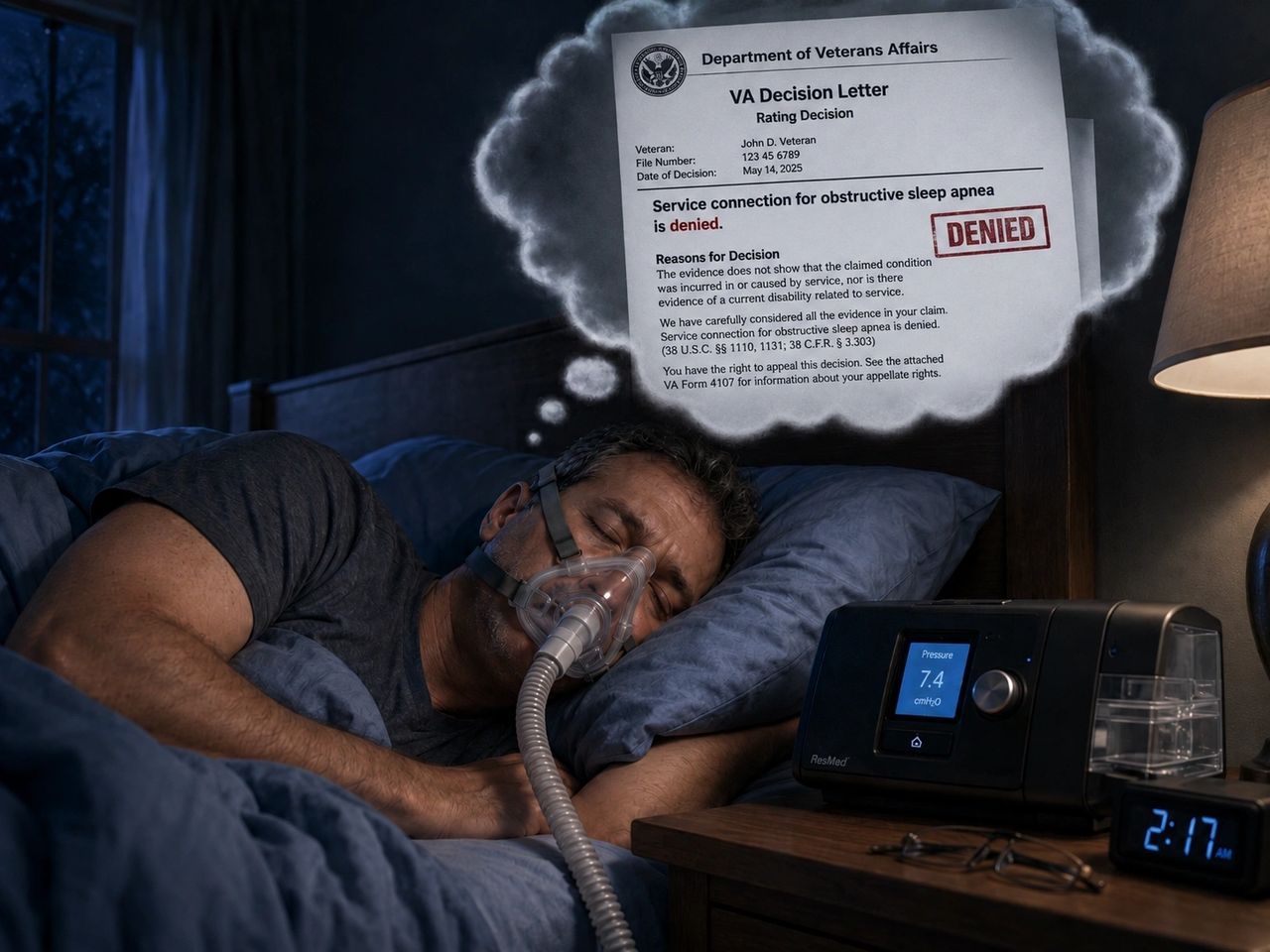
My sleep apnea claim was denied. What now?

Review the decision letter to identify exactly which element the VA found missing, usually the nexus. Most denials are best answered with a supplemental claim supported by new and relevant evidence such as a physician-written nexus letter, buddy statements, or a fresh sleep study.

Can a spouse or buddy statement help my claim?

Yes. Lay statements describing witnessed snoring, choking, gasping or daytime sleepiness during and after service are competent evidence of observable symptoms and often supply the continuity the record is missing.

Do these articles constitute medical or legal advice?

No. They are general educational information about VA sleep apnea claims. Individualized medical opinions are provided only after a records review through a formal consultation.